


I've got two stories to tell that seem very different on the surface, but once you dig deeper they are the same story told at different scales. This story is about embracing your true self, and being open to sharing everything you have with the world. It's a story of vulnerability and defensiveness, and how both can be used to grant freedom and fearlessness.
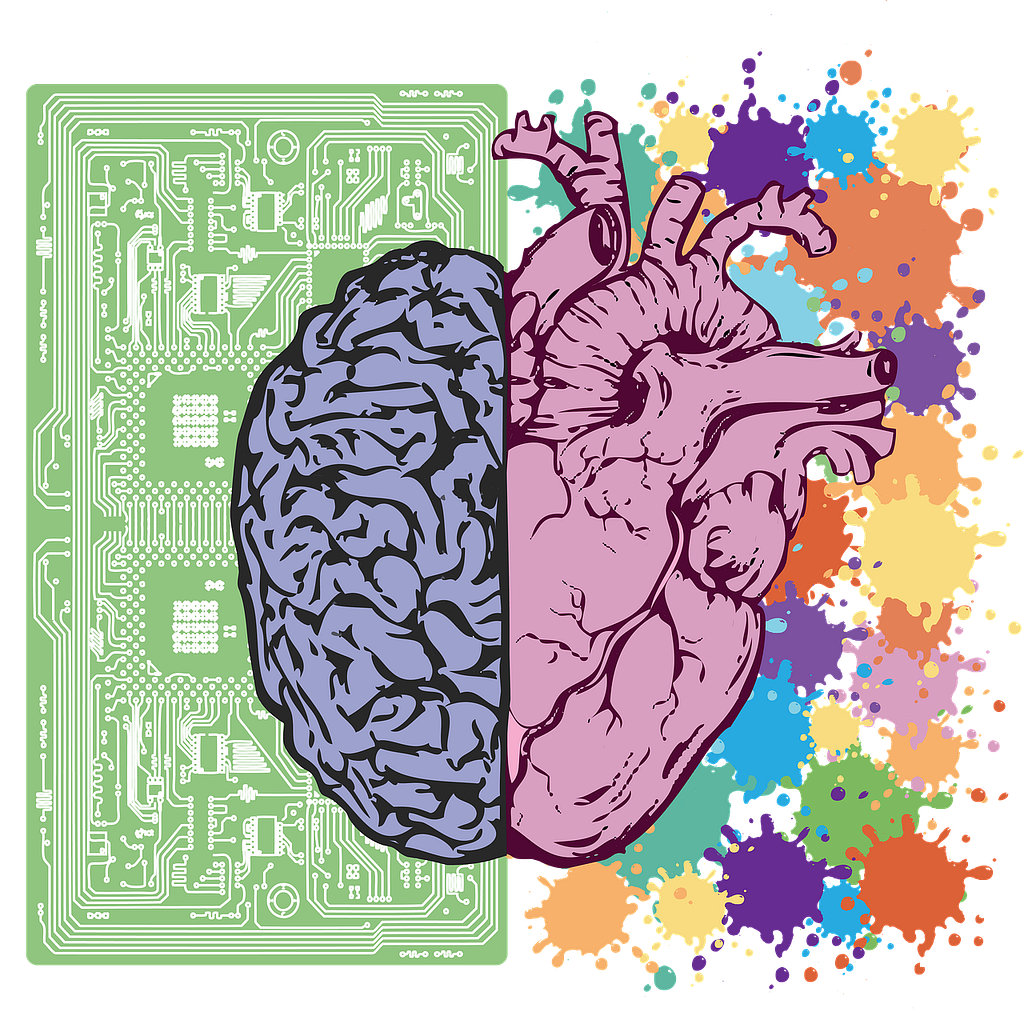
People have an innate feeling that there is more to them than meets the eye. This plays out on two levels. The first level is the stories you tell yourself as well as what you show to the world. That's the more external level. The second, internal level is what you intuitively know about yourself, and how you feel. There are many ways of talking about this personal duality, whether its your conscious mind vs your unconscious, your ego vs your soul, or your mind vs your heart. Some people are more in tune with themselves, and some people focus more on the mask. To keep it simple, I like the description of the intellectual side and the emotional side.
You intellectual side is your logic, your processing, and your experiences. You live, you process, and you learn, and that builds up your interactions with the world. Your emotional side is your intuition, your feelings, and that little voice inside your head. You have experiences in life, those experiences make you feel a certain way, and you react to those feelings in a healthy (or unhealthy) way. In a way, you could say that your intellectual side is focused on looking outwards and interacting with the world, while your emotional side is looking inwards towards how you feel. By inverting the directions, you can discover more about yourself and interact with the world in a more pure way.
Another thing that is controlled by your intellectual side are your defense mechanisms. When your emotional side has been hurt in the past, whether it be from a friends betrayal, a loss of trust in a relationship, or a personal failure, your intellectual side will throw up barriers to try and protect your emotional side. As these barriers grow over time, it can lead to feeling that you're not being genuine and not being yourself. You feel as if you're wearing a mask, and not REALLY interacting with the world, but putting on a show. Some say the answer is vulnerability, and opening yourself up, but a better answer is to use your intellectual side to build armour.
When you get hurt by an experience, the instinct is to recoil and avoid that experience so it can never hurt you again. Sometimes, this plays out as trust, relationship, or personal issues of not being able to listen to yourself or trust your own judgement. The fear-based response is to run from the experience, but if you always run from experiences then eventually you are running from all the good things life has to offer because you're trying to avoid the bad. The vulnerable answer is "Get back in the ring, don't be afraid of being hurt. Open yourself up, go back to those experiences, and hope it works out better the second time." This can be a brave response, because it's intimidating to face things that have hurt you, but it can also be a foolish response because some things hurt for a reason, and you should stay away. The better response is to use your intellectual side to build armour so you can approach the experiences with caution. Then you can have the benefit of experiencing everything, while keeping some protection to not be hurt again.
When speaking about armour, it's easy to go overboard and put on too much. A good analogy is being in a fight. Someone punches you, and you get hurt. You don't want to get hurt again, so you back off and don't let anyone ever touch you. That's great, because if no one can touch you then no one can punch you, so you've avoided the pain! But if no one can touch you, then no one can hug you, hold your hand, or kiss you. You've avoided the bad, but sacrificed all of the good. Instead, imagine wearing a medieval suit of armour and getting back in the fight. You're now protected, and if someone punches you then it's no big deal. You can still hug, hold hands, and maybe even kiss, but there's still a barrier up so you're missing out on the full experience.
To bring back the full exprience, there are a few ways. One, is to take the hits without armour; Good or bad, bring it on. Two, is the ability to heal faster, so even if you're hit by something bad, you can get over it quickly. Three is sticking with the armour analogy, and adding the idea of coverage and speed.
I relate this a lot to Iron Man's armour throughout the Marvel movies (there are some character development tie-ins as well, that's a discussion for another day). In the beginning he has a big clunky suit of armour that is hard to move and interact with the world in. He then builds a suit he can take on and off easier while moving more naturally. Next, he has armour in a suitcase that can be put on at a moments notice. Then he gets a suit that can be worn in separate pieces that will fly to him by instinct. Finally, he ends up with a specialized nanotech suit that can instantly form around any part of him, as well as gaining/losing armour as the situation requires.
All of these evolutions lead toward different levels of coverage and speed for yourself. On one hand, you can wear different amounts of armour to protect different parts of yourself. On the other, no matter what armour you're wearing you can take it on and off quickly to expose (or protect) yourself as needed.
As you go through life and have different experiences with people, you gain the wisdom to see what needs to be protected against. You know when you can "let your guard down", and when you need to be protective of yourself when something doesn't seem right.
What you want to cover depends on what hits you're willing to take, and how fast you can put the armour relates to how fast you open up to others.
Wearing armour is useful for protecting individual parts of yourself, but the armour can also act as a mask that hides your "true self" from the world.
Most people have thoughts of "Am I good enough", "Will people accept me for who I am", and "Who am I to say what's good or bad?". When people are unsure of themselves, they find it hard to be authentic with the world and fully be themselves. Instead of being themselves, they put on masks to interact with the world. The masks are also a defensive maneuver because if a person is attacked or insulted, it's easy to brush the attack off as an attack on the mask, not as an attack on their "real" self. However, the masks block the positive affirmations as well, which leads to feelings such as imposter syndrome or being fake.
By being conscious of the masks that you wear, and being able to change them, you can find the best of both worlds. Use the masks as armour so that you can be protected from the bad, but tailor your own masks so that you are still representing your true self to the world.
For example, I'm naturally an introverted person. If I stuck to that nature, I would miss out on meeting new people and finding new opportunities. If I want to go to a networking event, I can put on my extrovert mask and feel comfortable interacting with the world via that armour. Some say it is disingenuous and fake to project a false image, but that's where the self knowledge of what masks you're wearing comes in. It's not a fake, lying mask that shows a false representation of yourself, it's a mask that helps you with the qualities you need to work on, and highlighting the qualities about yourself that you want to shine.
In order to do all of this, you need self reflection and honesty. Your intellectual side cannot communicate or work with your emotional side unless you build a bridge between them. Once you've had a bad experience, it's hard to coax your emotional side out of its shell by saying "come on, everything is fine, you won't get hurt this time!". You've already been hurt by the experience, your emotional side expects to get hurt again. Instead, it's much easier to coax out your emotional side by saying "It's ok, I know it's scary, but I'll protect you". Acknowledging the danger and having a plan is how you rebuild trust. By knowing how to protect yourself and by listening to both sides of yourself, you can have an easier time of embodying your true self.
The purely emotional response of "be yourself, open up" has a large amount of fear to it, largely based on acceptance. If you show your true self, how will people respond? Some say an ideal response is to not care what others think, but that's not a healthy response. Other people's opinions about you should matter less than your opinion of yourself, but you can't fully disregard them. If you're afraid to open up and be vulnerable, yet the advice you're trying to follow is "just be yourself", are you really opening up with all of your true self, or only opening with the parts that you're comfortable showing the world? What about all the parts of you that you're not comfortable showing yourself? By giving your emotional self the knowledge that it is safe and protected to come out, you can build on what makes you true to yourself, and embody the qualities that you desire. This works on an inner level when you're being honest with yourself, as well as the external level to be more honest with the world.
The last part to add is that we are creatures of change. Over time we have new experiences, learn, and grow. "Being yourself" will be a different self when you're a kid, teenager, adult, parent... Trying to hold on to one version of yourself and calling that "your true self" will leave you stuck. Using your intellectual side to examine how you interact with the world, and using your emotional side to embody what feels right to you, you can change over time. Inverting those sides by using your intellectual side to see why things feel right to you, and helping your emotional side to interact with the world leads to a richer, more connected life with others.
The goal of all of this is the search for truth. You can split it into "What's good and bad" or "What's right and what's wrong?", but it all comes down to the only question that matters. "What do I do?"
What do you show to others? What makes you, you? If you only look at the inside of yourself, you'll always feel disconnected with the rest of the world. If you only look at the outside, then you'll feel disconnected with yourself. Intellect won't give you the answer, emotion won't give you the answer, the only way to truth requires both.